
CPAP — Continuous Positive Airway Pressure
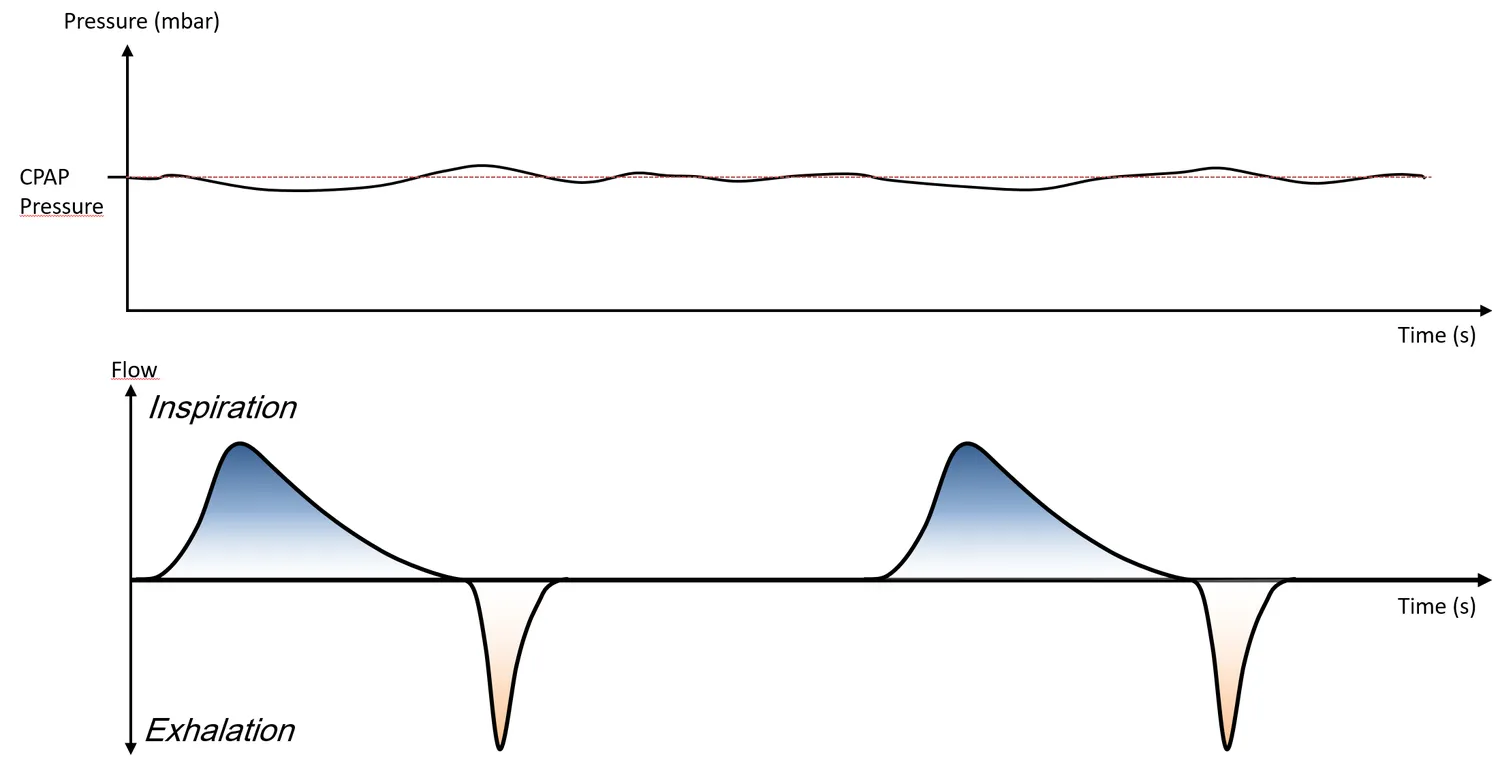
One continuous positive pressure across the whole cycle. The patient breathes entirely on their own; the device adds no inspiratory support, only holding the set pressure steady to keep the airway open and improve oxygenation.
Waveforms
Physiological basis
CPAP works through several mechanisms. It maintains airway patency, preventing upper-airway soft-tissue collapse and keeping alveoli open at end-expiration (anti-atelectasis). It raises functional residual capacity, reducing intrapulmonary shunt and improving V/Q matching.
It also has cardiac effects: positive intrathoracic pressure lowers left-ventricular afterload, which is valuable in cardiogenic pulmonary edema. And it counters auto-PEEP in COPD, lowering the trigger threshold against intrinsic PEEP and reducing the work of breathing.
Adjustable parameters 1
Constant pressure applied throughout the cycle (mbar). Typical 5–12 cmH₂O; 6–14 in OSA, 5–10 in cardiogenic edema, 5 in the final weaning stage.