
BiLEVEL — BiLEVEL
A spontaneous mode applying two pressure levels — higher inspiratory (IPAP) and lower expiratory (EPAP/PEEP). All breaths are patient-triggered; the device does not impose mandatory breaths.
Waveforms
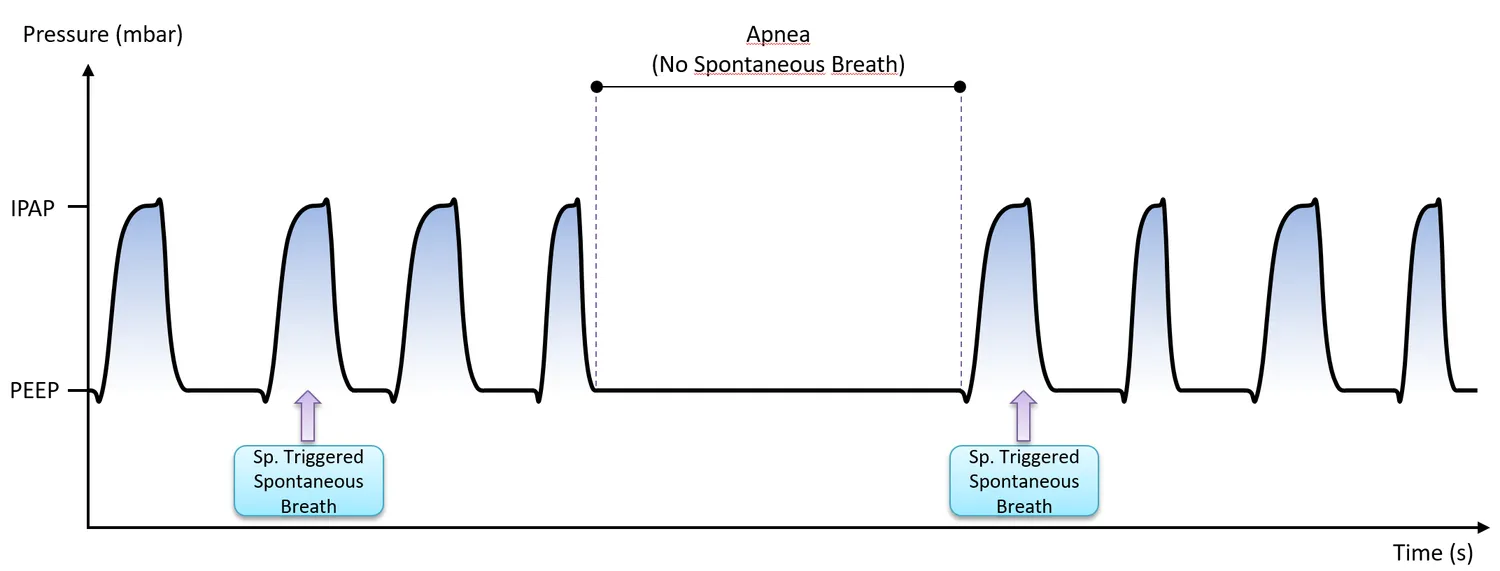
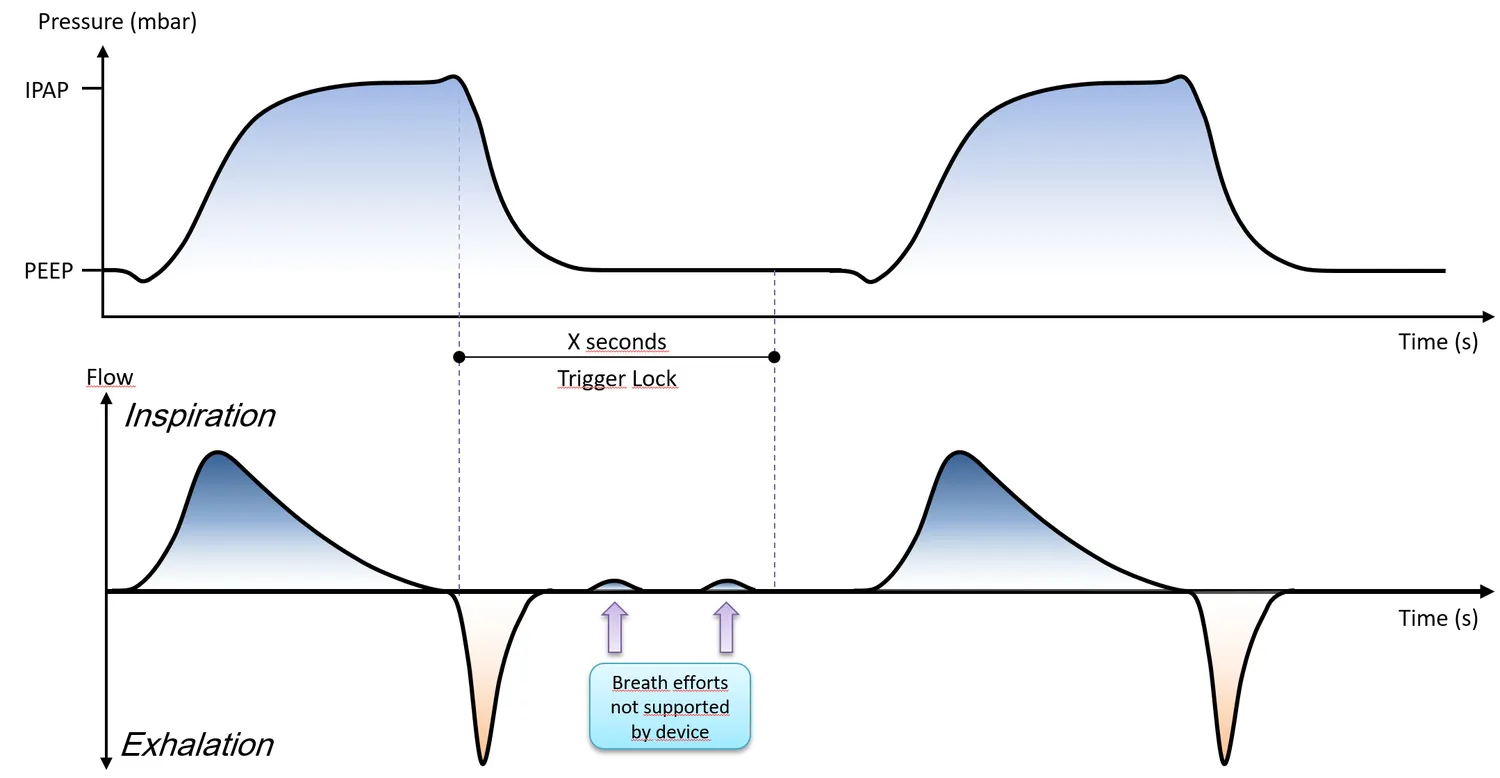
Physiological basis
BiLEVEL raises CO₂ removal and alveolar ventilation with a higher inspiratory pressure, while a lower expiratory pressure (EPAP) keeps the airway open. The IPAP–EPAP difference (driving pressure) sets the size of ventilatory support per breath: a larger delta means greater tidal volume and CO₂ clearance, while EPAP prevents airway collapse and obstructive events.
BiLEVEL and PSV share pneumatic principles but differ in naming (IPAP/EPAP vs IPAP/PEEP), in backup (BiLEVEL classically has none; PSV provides an apnea backup), and in typical use — BiLEVEL for non-invasive home therapy, PSV for ICU weaning.
Adjustable parameters 10
Inspiratory pressure. Its difference from EPAP (ΔP) sets tidal volume and CO₂ clearance.
Positive expiratory pressure; for airway patency and oxygenation.
Monitoring reference.
Safety limit.
Rate of pressure rise; a slower rise adds comfort in high-resistance profiles.
Sensitivity for detecting spontaneous effort.
Expiratory-transition criterion; critical in obstructive lung disease.
Early re-triggering prevention.
Safety limits against cycle disruption.
Atelectasis prevention: a periodic deep breath.