
PSV — Pressure Support Ventilation
A purely spontaneous mode: the device detects each inspiratory effort and applies pressure support, flow-cycling to expiration. It never initiates breaths itself; an apnea backup engages if no effort is detected.
Waveforms

Physiological basis
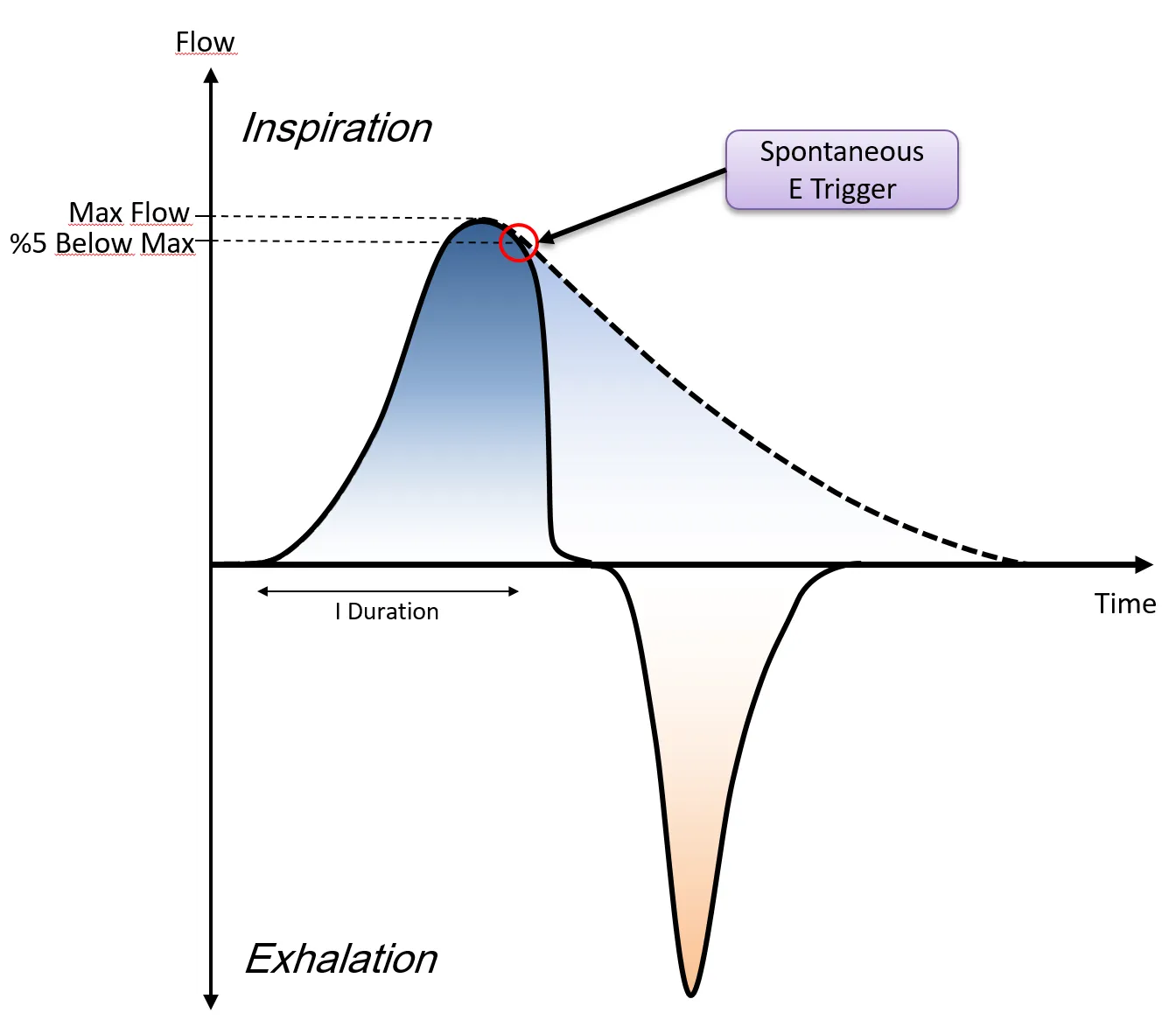
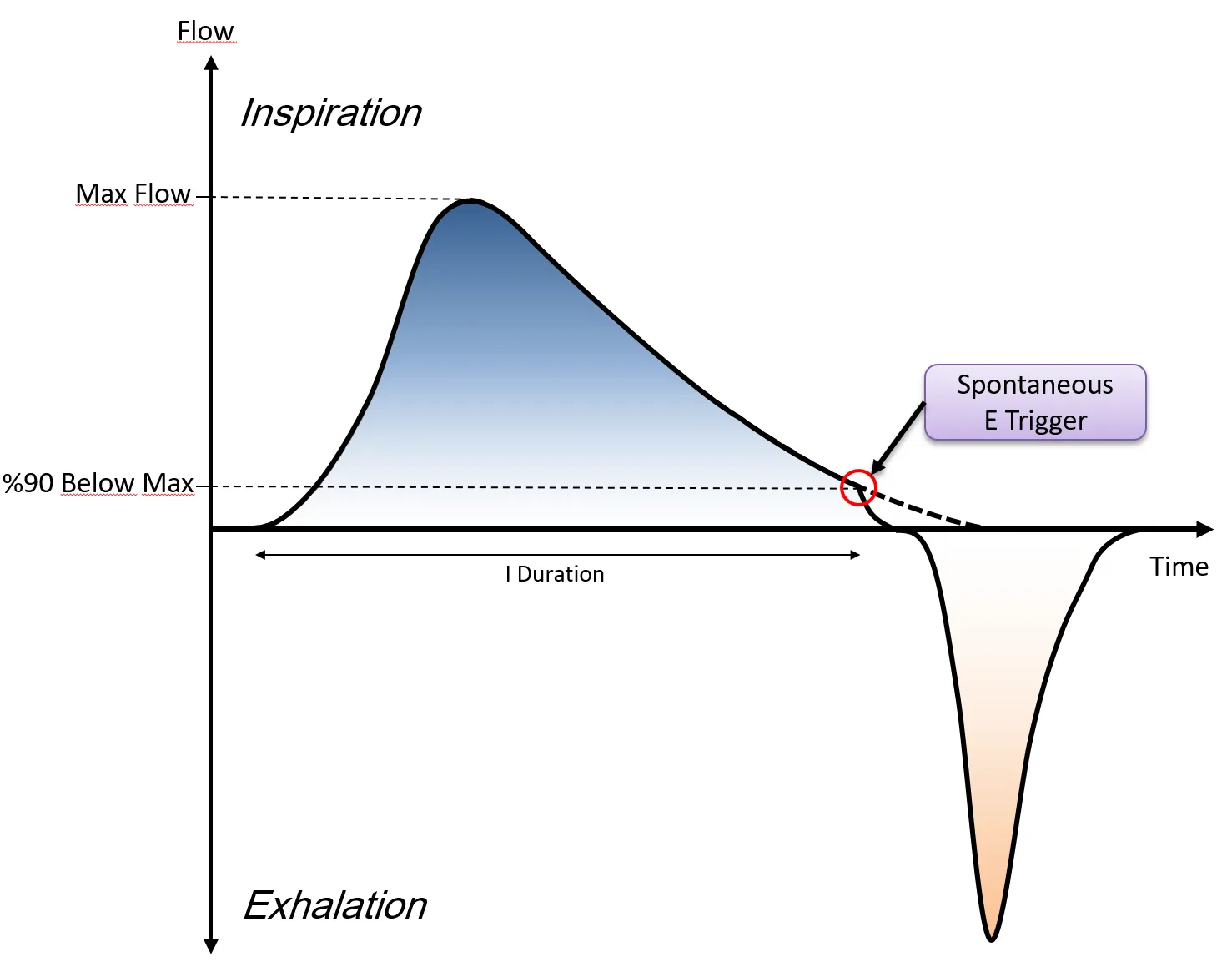
Each PSV breath has three phases. Triggering: a small patient effort changes circuit flow and the device starts pressure support. Limiting: the device quickly reaches IPAP and flow begins to fall, the decelerating profile optimizing gas distribution. Cycling: when inspiratory flow drops to the set expiratory-trigger percentage of its peak, the device switches to PEEP for passive exhalation.
The patient’s drive, muscle strength and lung mechanics directly shape tidal volume. High drive with high PS can produce excessive volume and transpulmonary pressure; low drive with weak muscles can give too little volume, with the apnea backup taking over.
Adjustable parameters 13
The level of pressure support; indirectly determines tidal volume.
Positive end-expiratory pressure; for oxygenation and triggering.
Monitoring reference (keeping under 8–10 ml/kg is recommended).
The mandatory rate activated in case of apnea.
Inspiration time during apnea backup breaths.
Safety limit.
Rate of pressure rise; affects comfort and trigger quality.
Spontaneous effort threshold; too sensitive → auto-triggering, too coarse → delayed triggering.
End-inspiratory flow percentage; can be raised in obstructive disease.
Early re-triggering prevention.
Safety limits against cycle disruption.
Spontaneous-breathing wait threshold; if exceeded, backup engages.
Atelectasis prevention: a periodic deep breath.